
Published by Channelica IPTV as part of our creator and culture blog series.
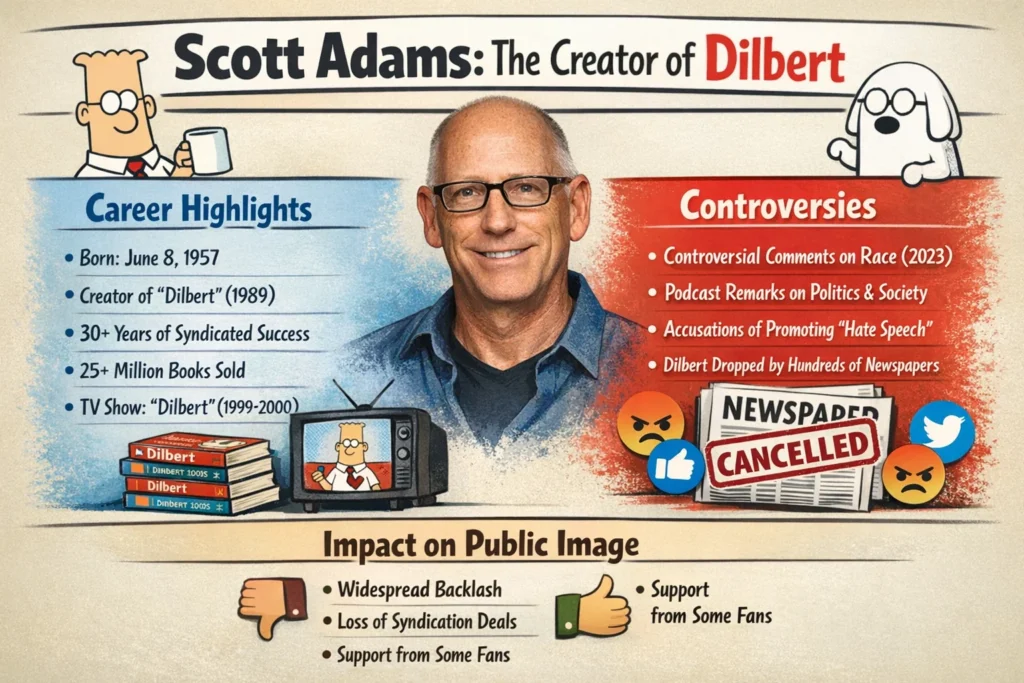
Scott Adams (born 1957) is an American cartoonist and author best known for creating Dilbert, the comic strip that turned everyday office frustration into mainstream satire. For years, Dilbert served as a shared reference point for corporate life endless meetings, confusing leadership, and workplace buzzwords that seemed to replace real progress.
Over time, Adams also became known for writing and commentary outside comics. In recent years, his public profile was strongly affected by controversies linked to statements he made publicly, which led to widespread business and syndication consequences for Dilbert.
Primary reference: https://en.wikipedia.org/wiki/Scott_Adams
Why Dilbert Became So Popular
Workplace humor that felt authentic
What made Dilbert stand out was its ability to capture office life in a way readers instantly recognized. Common themes included:
- managers who rely on slogans rather than clarity
- shifting priorities that undermine real work
- bureaucracy and “process” overtaking results
- employees trying to stay productive in dysfunctional systems
Even people outside engineering and tech could relate, because the humor wasn’t really about engineering it was about organizations.
A perfect match for its era
As corporate culture became more standardized (reorgs, performance reviews, mission statements, and jargon-heavy communication), Dilbert became a simple daily release valve. It didn’t require deep context just recognition.
Early Background (High-Level)
Biographical summaries describe Adams as having grown up in New York state and later studying subjects including economics before working in corporate environments. That professional experience matters because it gave Dilbert its “insider” tone—like it was written by someone who had actually sat through the meetings.
The Rise of Dilbert: From Newspaper Strip to Major Brand
When did Dilbert start?
According to widely cited sources (including Wikipedia), Dilbert began in 1989 and grew into a major syndicated feature.
Expansion into books and media
As popularity increased, Dilbert expanded beyond newspaper pages into:
- best-selling collections and spin-off books
- merchandise such as calendars
- an animated TV adaptation (not long-running, but notable)
At its peak, Dilbert became cultural shorthand for “this is what office life is really like.”
Scott Adams as an Author and Commentator
Beyond cartoon collections, Adams wrote books that extended his interests into broader topics such as:
- persuasion and influence
- personal systems and goal-setting
- business culture and how decisions get made
A consistent thread in his non-comic work has been how narratives and framing can shape what people believe—especially in business and politics.
Controversies and the Impact on Dilbert Distribution
Adams’ later public image became strongly shaped by controversy connected to statements he made publicly outside the comic. Biographical sources (including Wikipedia) summarize that certain remarks attributed to him were widely condemned (including accusations of racism). In response, many newspapers and distributors stopped carrying Dilbert, and major professional relationships were ended.
Editorial approach (recommended for blogs): If you cover this topic, it’s best to avoid repeating inflammatory wording and instead focus on verifiable outcomes (public announcements, syndication changes), supported by reliable citations.
Influence and Legacy: What Dilbert Changed
Even after distribution setbacks, Dilbert’s influence is still visible in workplace humor today.
Cultural impact
- It helped popularize skepticism toward corporate buzzwords.
- It made office dysfunction a mainstream topic of comedy.
- It provided a shared language for describing bad incentives and bad management.
Creative impact
Modern workplace memes and corporate satire accounts often follow a Dilbert-like template: short scenes, recognizable office archetypes, and jokes built around incentives, bureaucracy, and miscommunication.
Channelica IPTV Note
If you’re exploring entertainment and media culture with us at Channelica IPTV, you can also browse our service options here:
https://channelica.com/choose-a-plan/
FAQ
What is Scott Adams famous for?
He is best known as the creator of Dilbert, a comic strip that satirizes corporate and office life.
When did Dilbert begin?
Dilbert began in 1989, according to widely cited biographical sources.
Did Scott Adams write books?
Yes. He wrote multiple books, including Dilbert collections and other works related to business, persuasion, and personal systems.
Why did many newspapers stop running Dilbert?
After public remarks attributed to Adams were widely condemned, many newspapers and distributors ended publication of the strip. For strongest accuracy, use reputable news citations alongside Wikipedia.